Chicken is better for your ApoB than red meat
Short answerNo
On this page
No. In a feeding trial that measured ApoB directly, chicken and turkey raised it just as much as beef. What brought it down was getting protein from beans, nuts and soy instead of meat, which took off about 3 to 4 mg/dL, and cutting saturated fat, which took off about 6 to 7.
What we’d do
Count chicken with beef. Swapping one for the other won’t move your ApoB. Make beans, lentils, tofu and nuts the main protein a few more days a week, and cut the saturated fat in butter and cheese, which is where most of it came from in the trial. If you like steak and chicken equally, eat whichever you enjoy, and spend your effort on the plant swap and the butter. Then retest at the same lab 6 to 12 weeks later.
If you remember three things
- Red and white meat came out the same. 73 and 74 mg/dL on the high saturated fat diet, 67 and 67 on the low.
- Plants beat both. About 3 to 4 mg/dL lower than either meat.
- The butter counted for more than the meat. Halving saturated fat took off 6 to 7, and most of it came from butter and dairy.
Why people believe it
For decades the heart advice was to choose lean poultry over red meat, and a skinless chicken breast does have less fat than many cuts of beef. It seems obvious that chicken would be kinder to your blood. What nobody had done, until recently, was feed people the two meats with everything else held the same and measure their ApoB.
What the trial found
Nathalie Bergeron, Ronald Krauss and their colleagues at Children’s Hospital Oakland Research Institute in California ran the trial between 2012 and 2016. They gave 113 healthy adults aged 21 to 65 three diets for four weeks each, in random order, with a break between them. Nearly all the food was provided, apart from fresh fruit and vegetables.
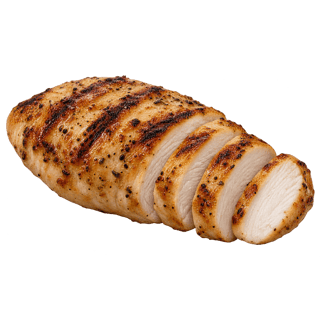
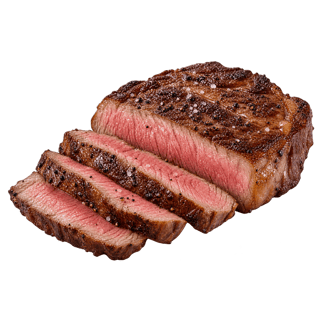
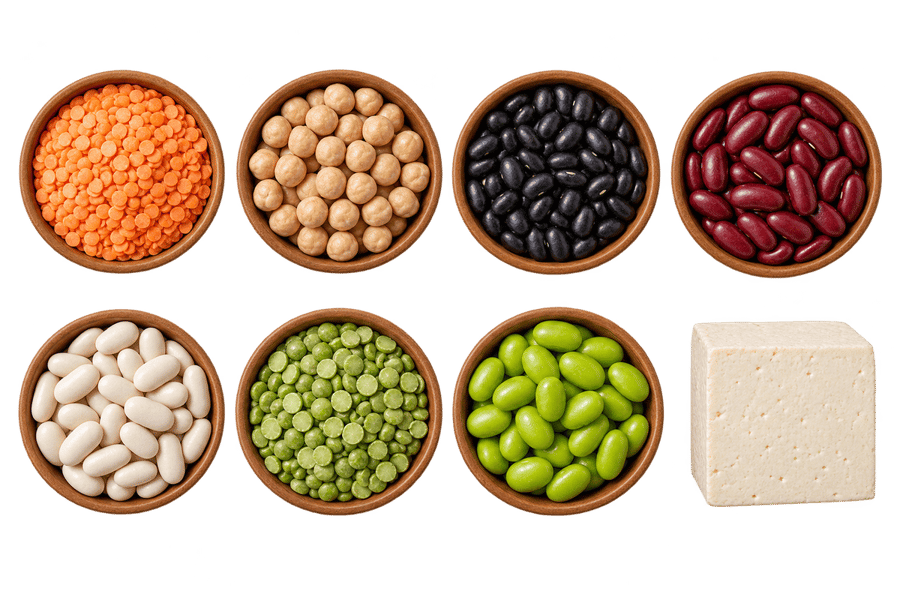
The only thing that changed between the three diets was the main protein, about 12% of calories. It came from red meat (mostly beef, a little pork), from white meat (chicken and turkey), or from plants (beans, nuts, grains and soy). The meat was lean, and there was no processed meat and no fish. On top of that, one group of people ate about 14% of their calories as saturated fat, and the other about 7%.
| ApoB, mg/dL | Red meat | White meat | Plants |
|---|---|---|---|
| High saturated fat (about 14%) | 73 | 74 | 70 |
| Low saturated fat (about 7%) | 67 | 67 | 63 |
Red and white meat landed in the same place. The researchers wrote that the main results “did not differ significantly between red and white meat”, and that their findings “do not provide evidence for choosing white over red meat for reducing CVD risk”. The plant diet took ApoB about 3 to 4 points lower than either meat. Halving saturated fat took off 6 to 7 points on every protein.
Where the saturated fat came from
Lean meat supplied only a small part of the saturated fat, about 2 to 3% of calories. Most of the extra on the high diet came from butter and full-fat dairy. In the plant diets the researchers added a little tropical oil to match the meat diets’ saturated fat, so the plants won on protein alone.
That changes which swap is useful. Trading a steak for a chicken breast does nothing measurable for ApoB. Trading butter for olive oil, and a cheese sandwich for a bean one, does. The 2026 US guideline’s list of saturated fat sources is red meat, butter, full-fat milk, coconut oil and palm oil, and the trial says chicken belongs next to beef when you’re counting protein.
Like repainting a truck
ApoB counts particles, and you can think of them as trucks on a highway. Choosing chicken over beef is like repainting a truck from red to white. It’s the same truck on the same road. Swapping meat for beans takes a few trucks off the road, and cutting butter takes off a few more.
The best case for chicken
A skeptic has a few good points. The trial ran four weeks per diet, with healthy people whose ApoB started fairly low, about 74 mg/dL. It used lean, unprocessed cuts, so it says nothing about bacon or sausage, and fish wasn’t tested at all. The researchers themselves point out that the meat diets raised mostly the larger LDL particles, which in the long-term studies they cite were less tied to heart disease than small ones, though they note those findings “have been challenged”.
ApoB counts every particle, large or small, one ApoB each, and the National Lipid Association treats each one as a particle that can get caught in the artery wall. Red meat may still have downsides chicken doesn’t share, which this trial didn’t look at. For ApoB, though, it’s the best direct test anyone has run, and it found no difference.
How to see it in your own numbers
The plant swap is about 3 to 4 points. Your ApoB wobbles about 6.4% from test to test on its own, and the lab adds 5 to 6%, so a change has to pass about 15% before it’s probably real. One swap won’t show on a single retest. Do the plant swap and the saturated fat cut together, give them 6 to 12 weeks, and retest at the same lab. Did my ApoB really change? tells you whether the drop is bigger than the noise.
5 sources
- Bergeron N, Chiu S, Williams PT, King SM, Krauss RM, red meat, white meat and plant protein on high and low saturated fat diets, a feeding trial in 113 adults, American Journal of Clinical Nutrition, 2019pmc.ncbi.nlm.nih.gov
- Blumenthal RS, Morris PB, Gaudino M and others, 2026 ACC/AHA guideline on the management of dyslipidemia, JACC and Circulation, 13 March 2026doi.org
- The same guideline, full text, Circulation, 2026api.iscpcardio.org
- Kafonek SD, Derby CA, Bachorik PS, Biological variability of lipoproteins and apolipoproteins in patients referred to a lipid clinic, Clinical Chemistry, 1992pubmed.ncbi.nlm.nih.gov
- Soffer DE, Marston NA, Maki KC and others, Role of apolipoprotein B in the clinical management of cardiovascular risk in adults: an Expert Clinical Consensus from the National Lipid Association, Journal of Clinical Lipidology, 2024pmc.ncbi.nlm.nih.gov