Does saturated fat raise ApoB?
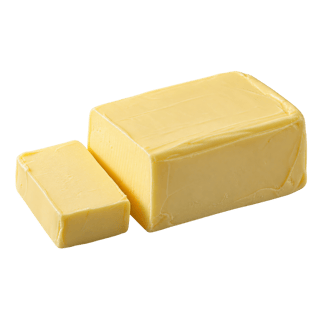
Yes. In a 2019 feeding trial of 113 adults, people eating about 14% of their calories from saturated fat had ApoB about 6 to 7 mg/dL higher than people eating about 7%, on every protein the trial tested. Most of the extra saturated fat came from butter and full-fat dairy.
What we’d do
Halve it. Cook with olive or canola oil instead of butter, eat cheese as a garnish instead of a main, and pick lean cuts or skip the meat. Then go one step further and make beans, lentils, tofu and nuts your main protein a few more days a week, which took off another 3 to 4 points in the same trial. Count chicken with beef, since the trial found they raised ApoB about the same.
The trial
Researchers split 113 healthy adults aged 21 to 65 into two groups, one eating about 14% of calories from saturated fat and one about 7%. Within each group, everyone ate three diets for four weeks each, in random order: red meat, white meat, or plant protein from beans, nuts, grains and soy. The kitchen provided all their food except fresh produce, and everyone’s weight was held steady.
Average ApoB after four weeks, by saturated fat and protein.
High saturated fat (about 14% of calories) on the left, low (about 7%) on the right. White meat landed within a point of red meat in both groups. From the trial’s own table.
| Saturated fat | Red meat | White meat | Plant protein |
|---|---|---|---|
| About 14% of calories | 73 | 74 | 70 |
| About 7% of calories | 67 | 67 | 63 |
The two fat levels were two different groups of people, so the 6 to 7 point gap compares groups. The protein swap was the same people on different diets.
What 14% and 7% look like
On 2,000 calories a day, 14% is about 31 g of saturated fat and 7% is about 16 g. The extra in this trial came mostly from butter and full-fat dairy, with only 2 to 3% of calories from the meat itself. The 2026 US guideline lists a high saturated fat intake among the causes of high LDL, and it asks every doctor to check the diet of anyone with severe high cholesterol for exactly this.
It’s like a bathtub with the tap running. Saturated fat turns the tap up, and the water level rises within weeks.
Large particles and the fight about them
The extra ApoB on the high saturated fat diet came mostly as large LDL particles, the kind that carry the most cholesterol each. The trial’s own authors pointed out that large LDL hasn’t been tied to heart disease in several population studies, and some people argue that makes saturated fat less of a worry.
We don’t buy it. In UK Biobank and two drug trials, 429,959 people in all, risk of heart attack “was best captured by the number” of ApoB particles, whatever cholesterol or triglyceride they carried. That study compared particle kinds rather than LDL sizes, but it points the same way as the gene studies, where the benefit followed the particle count whichever kind of particle went down.
What would lower my ApoB? puts the saturated fat cut beside your gap to goal. cholesterol.guide has what the same swap does for LDL.
5 sources
- Bergeron N and others, red meat, white meat and plant protein on high and low saturated fat diets, a feeding trial in 113 adults, American Journal of Clinical Nutrition, 2019pmc.ncbi.nlm.nih.gov
- Blumenthal RS, Morris PB, Gaudino M and others, 2026 ACC/AHA guideline on the management of dyslipidemia, JACC, 2026doi.org
- The same guideline, full text, Circulation, 2026api.iscpcardio.org
- Marston NA and others, Association of apolipoprotein B-containing lipoproteins and risk of myocardial infarction in individuals with and without atherosclerosis, JAMA Cardiology, 2022pubmed.ncbi.nlm.nih.gov
- Ference BA and others, Association of triglyceride-lowering LPL variants and LDL-C-lowering LDLR variants with risk of coronary heart disease, JAMA, 2019pubmed.ncbi.nlm.nih.gov