Is my ApoB high?
Your ApoB in either unit and the risk your doctor gave you. Out come your goal, your gap, where you sit among US adults, and one next step.
Showing an example. Type your own number.
LDL or ApoA1 from the same report
You're 22 over your goal. Here's what the trials say lowers ApoB, and by how much.
112mg/dL, 1.12 g/L
- Under 60 very high risk
- Under 70 high risk
- Under 90 borderline or intermediate risk
- 120 raises risk
- 140 severe
mg/dL over g/L. Rungs from the National Lipid Association (2024), matched to the 2026 US guideline's LDL goals. Ticks from the 2026 guideline.
Clears 0 of 3 rungs. Compared with under 90, the goal at borderline or intermediate risk. Ask your doctor for your PREVENT score to find your rung.
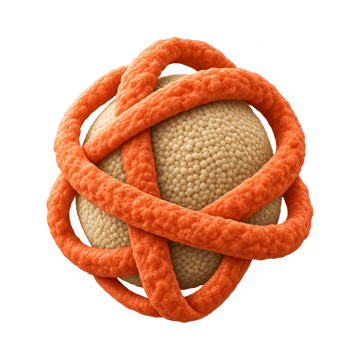
Higher than 79 of 100 untreated US adults. Line up 100 of them and you'd be bead 80. The hundred beads
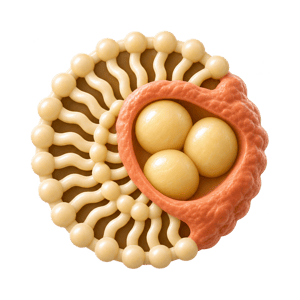
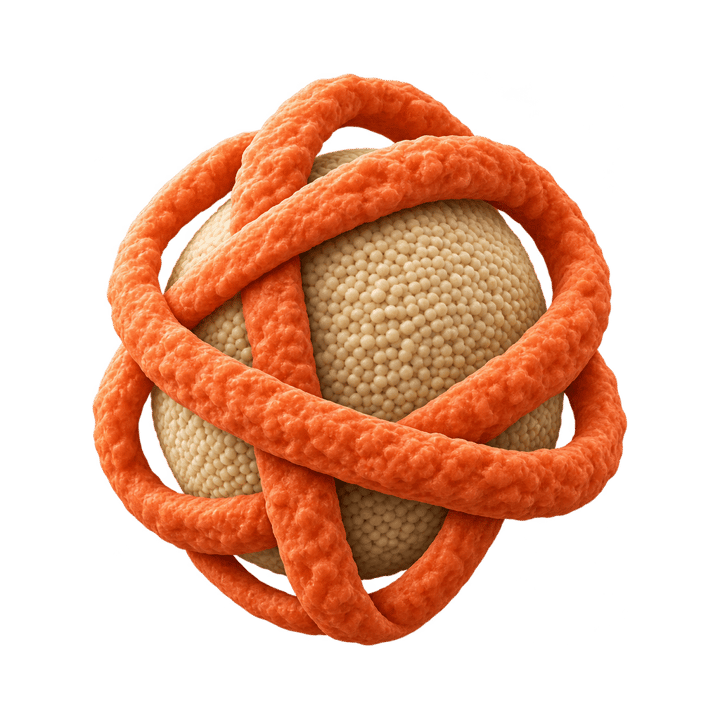
At 112, your blood carries about 1 in 4 more of these than at 90.
You're 22 points from under 90, the goal at borderline or intermediate risk. The biggest single food change in trials takes off about 7. A gap this size is a conversation to have with your doctor.
Next step. Start with the saturated fat cut and the protein swap, then retest at the same lab in 6 to 12 weeks. The twelve week plan
What your result means
- At your goal: nothing to change. Test again with your next cholesterol panel.
- Over your goal: the gap is how far you have to go. Up to about 7 points is the size of one food change, and up to about 20 the two food changes together may close it. Past 20, food alone rarely gets there in trials, so it's a conversation with your doctor (can I lower ApoB without medication?).
- 120 to 139: the 2026 guideline lists this as something that raises risk, whatever your goal. Tell your doctor.
- 140 or more: the guideline calls it severe high cholesterol. See a doctor before you plan a diet.
- On a cholesterol medicine: your prescriber decides any change. Take both your ApoB and your LDL to the next visit.
Check it once, step by step
- Copy the number from your report in mg/dL or g/L. The checker switches units for you.
- Pick the risk band your doctor gave you. If you don't know it, compare with under 90 and ask your doctor for your PREVENT score.
- Add your LDL from the same report to see whether the two agree.
- Write down the date and the lab, so your next result can be compared fairly.
The goals by risk
The 2026 US guideline set goals for LDL by your risk of a heart attack or stroke, which your doctor works out with the PREVENT calculator. The National Lipid Association's 2024 table matches ApoB to the same LDL goals: under 60, 70 and 90. This page never computes a risk score. Pick the band your doctor gave you, or see where you sit on every rung.
| Which fits you | ApoB goal | Matched LDL goal |
|---|---|---|
| Heart attack, stroke, stent or bypass | under 60 mg/dL0.60 g/L, or under 70 (0.70) if your doctor says you're not at very high risk. With FH, the guideline's own number is under 55 once your LDL goal is met | under 55 mg/dL |
| Diabetes, 40 or older | under 90 mg/dL0.90 g/L, or under 70 (0.70) if your doctor puts your 10-year risk over 10% | under 100 mg/dL |
| High 10-year risk (10% or more) | under 70 mg/dL0.70 g/L | under 70 mg/dL |
| Borderline or intermediate risk (3 to under 10%) | under 90 mg/dL0.90 g/L | under 100 mg/dL |
| Low risk (under 3%) | No number goal, healthy habits |
ApoB goals from the National Lipid Association's 2024 table, matched to the 2026 US guideline's LDL goals. The guideline's own lines: 120 or more raises risk, and 140 or more is severe high cholesterol, a doctor visit at any risk.
How it works
ApoB is measured, not worked out, and it doesn't move after a meal. A number under 5 is taken as g/L, and mg/dL is g/L times 100. Your percentile comes from the NLA's table of 12,696 untreated US adults in NHANES 2005 to 2016, found by drawing a straight line between its rows. That table doesn't split by age or sex, and the goals don't rise with age.
The guideline lists an ApoB of 120 or more as something that raises risk, and calls 140 or more severe high cholesterol. At 140 or more the page puts a doctor visit first. On a cholesterol medicine, ApoB often stays higher than LDL, and the guideline says checking it is reasonable once your LDL goal is met.
2 sources
- Blumenthal RS, Morris PB, Gaudino M and others, 2026 ACC/AHA guideline on the management of dyslipidemia, JACC, 2026doi.org
- Soffer DE, Marston NA, Maki KC and others, Role of apolipoprotein B in the clinical management of cardiovascular risk in adults: an Expert Clinical Consensus from the National Lipid Association, Journal of Clinical Lipidology, 2024pmc.ncbi.nlm.nih.gov