Fiber will bring a high ApoB down
Short answerSort of
On this page
Sort of. Fiber does lower ApoB. Across 181 trials, soluble fiber supplements took off about 4.5 mg/dL, psyllium about 5 and oats about 3. That’s real, and it adds up over years. But two ApoB tests can differ by about 15 points on a 100 with nothing changed, so fiber alone rarely shows on a retest, and it won’t close a big gap.
What we’d do
Take the fiber, and don’t make it your whole plan. Add psyllium husk, built up to about 10 g a day with plenty of water, or eat oats or barley most days. Put your main effort into the two bigger changes, cutting saturated fat and swapping meat for beans, lentils, nuts and soy. Judge the fiber over several retests, never one.
If you remember three things
- Fiber works. About 4.5 mg/dL across 181 trials, about 5 for psyllium.
- It’s smaller than one retest’s noise. At an ApoB of 100, a change has to pass about 15 points to be probably real.
- Bigger changes come first. Halving saturated fat took off 6 to 7 points in four weeks.
Why people believe it
Fiber is the easiest cholesterol advice to follow. You stir psyllium into water in the morning or have oatmeal for breakfast, and nothing has to go. Of all the food advice for cholesterol, it’s the one people actually follow, so it gets the credit, or the blame, when the next test comes back.
The trials say fiber does lower ApoB. The trouble is the size.
How much it takes off
Soluble fiber, any kind
181 trials, 14,505 people. Ghavami and colleagues, Advances in Nutrition, 2023
ApoB fell about 4.5 mg/dL on average (between 2.7 and 6.3).
The supplements varied, and so did the doses.
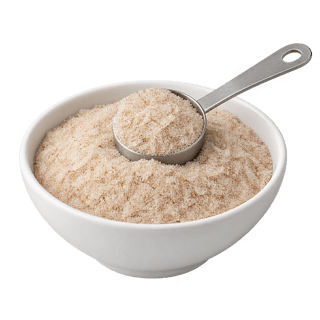
Psyllium husk
28 trials, 1,924 people, a median of about 10 g a day. Jovanovski and colleagues, 2018
ApoB fell about 5 mg/dL (0.05 g/L). The reviewers rated the ApoB evidence high quality.
Trials lasted at least 3 weeks.
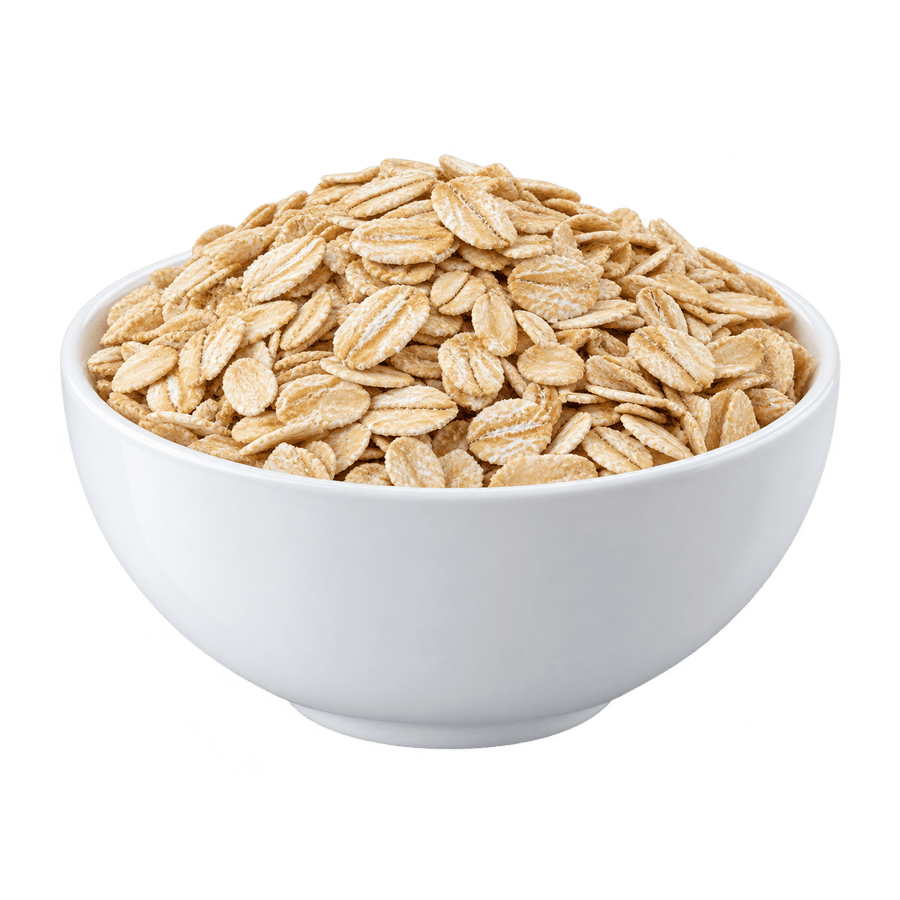
Oat beta-glucan
58 trials, 3,974 people, a median of 3.5 g a day. Ho and colleagues, 2016
ApoB fell about 3 mg/dL (0.03 g/L).
Results for LDL varied a lot between trials.
How it works
Psyllium forms a gel in your gut that carries bile out with it. Your liver makes bile from cholesterol, so it has to make more, and to do that it pulls more cholesterol in. In a 1992 trial of 20 men with high cholesterol, 15 g of psyllium a day for 40 days lowered LDL, and the researchers concluded it worked “primarily via stimulation of bile acid synthesis”. Your liver pulls cholesterol in by taking particles out of the blood, and each one carries an ApoB.
The noise problem
Your ApoB isn’t the same number twice. In a 1992 study at Johns Hopkins, lipid clinic patients tested on three visits before any treatment varied about 6.4% from visit to visit. The lab machine adds another 5 to 6%. Put together, a change has to pass about 15% to be probably real, and about 23% to be almost certainly real.
At an ApoB of 100, psyllium’s 5 points takes you to 95. The shaded band shows how far a retest could land with nothing changed at all, from about 85 to 115. The 95 sits well inside it, so on one retest you can’t tell the fiber did anything.
Like a small raise
Fiber is like a small raise at work. It’s real money, and over years it adds up. On any one paycheck it’s hard to see next to the overtime, the bonus and the tax changes. If you’re trying to pay off a big debt fast, the raise helps, but you’d also cut your biggest expense, and for ApoB that’s saturated fat.
What does show
In a feeding trial of 113 adults, halving saturated fat, from about 14% of calories to 7%, took ApoB down 6 to 7 points in four weeks. Getting protein from beans, nuts and soy in place of meat took off 3 to 4 more. Those are still smaller than one retest’s noise on their own, but together with fiber they start to add up, and the gap between the two groups furthest apart in that trial was 10 points. The twelve week plan puts them in order.
To see a small change, test more than once. Two draws a few days apart at each end, averaged, bring the probably-real line down from about 15% to about 11%.
Taking psyllium safely
Take each dose with at least 8 oz (240 ml) of water or another drink. Keep it 3 hours away from digoxin, aspirin and nitrofurantoin, and ask your pharmacist about your other medicines. If you’ve had a bowel blockage or have trouble swallowing, ask your doctor first.
8 sources
- Ghavami A and others, Soluble fiber supplementation and serum lipid profile: a systematic review and dose-response meta-analysis of 181 randomized controlled trials, Advances in Nutrition, 2023pmc.ncbi.nlm.nih.gov
- Jovanovski E and others, Effect of psyllium fiber on LDL cholesterol and alternative lipid targets, non-HDL cholesterol and apolipoprotein B, American Journal of Clinical Nutrition, 2018pubmed.ncbi.nlm.nih.gov
- Ho HV and others, The effect of oat beta-glucan on LDL-cholesterol, non-HDL-cholesterol and apoB for CVD risk reduction, British Journal of Nutrition, 2016pubmed.ncbi.nlm.nih.gov
- Everson GT, Daggy BP, McKinley C, Story JA, Effects of psyllium hydrophilic mucilloid on LDL-cholesterol and bile acid synthesis in hypercholesterolemic men, Journal of Lipid Research, 1992pubmed.ncbi.nlm.nih.gov
- Kafonek SD, Derby CA, Bachorik PS, Biological variability of lipoproteins and apolipoproteins in patients referred to a lipid clinic, Clinical Chemistry, 1992pubmed.ncbi.nlm.nih.gov
- Soffer DE, Marston NA, Maki KC and others, Role of apolipoprotein B in the clinical management of cardiovascular risk in adults: an Expert Clinical Consensus from the National Lipid Association, Journal of Clinical Lipidology, 2024pmc.ncbi.nlm.nih.gov
- Bergeron N, Chiu S, Williams PT, King SM, Krauss RM, red meat, white meat and plant protein on high and low saturated fat diets, a feeding trial in 113 adults, American Journal of Clinical Nutrition, 2019pmc.ncbi.nlm.nih.gov
- MedlinePlus, Psyllium, US National Library of Medicinemedlineplus.gov