You have to fast for an ApoB test
Short answerNo
On this page
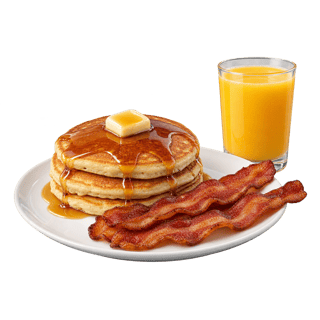
No. In a study of 33,391 adults in Copenhagen, ApoB didn’t change at all after a normal meal, while triglycerides went up. The 2026 US guideline says ApoB measurement is “standardized and unaffected by fasting status”. Eat breakfast, and book the test whenever suits you.
What we’d do
Don’t fast for ApoB. Book the draw at whatever time of day you can keep the same next time, since habits make retests easier to compare. If the same draw includes your full cholesterol panel, follow whatever your doctor or the lab asks for that part, because triglycerides do move after a meal. And if a lab tells you to come back another day because you ate, the ApoB itself didn’t need it.
If you remember three things
- A meal doesn’t move ApoB. 33,391 adults, no change.
- The guideline agrees. It calls the test “unaffected by fasting status”.
- Triglycerides are the ones that move. Up to about 26 mg/dL after a normal meal.
Why people believe it
For a long time, cholesterol tests meant no food after dinner and a hungry morning at the lab. The reason was triglycerides, which rise for hours after you eat. Many labs also work out LDL from your triglycerides with a formula, so a meal could nudge the LDL too. ApoB shows up on the same panel, so it got lumped in with the fasting rule.
What happens after a meal
In 2008 Langsted, Freiberg and Nordestgaard in Copenhagen looked at 33,391 adults aged 20 to 95 from the Copenhagen General Population Study, and compared their lipids by how long since they’d last eaten. The meals were whatever people normally ate.
| After a normal meal | Biggest change |
|---|---|
| Triglycerides | Up about 26 mg/dL, for up to 6 hours |
| LDL | Down about 8 mg/dL |
| Total cholesterol | Down about 8 mg/dL |
| ApoB | No change |
| ApoB to ApoA1 ratio | No change |
They also followed 9,319 people from another Copenhagen study for 14 years. Lipids measured without fasting still predicted who’d go on to have a heart attack, stroke or other heart event. The authors concluded that lipid levels “at most change minimally in response to normal food intake”.
Why ApoB holds still
The particles ApoB counts come mostly from your liver, which sends them out around the clock. A meal makes your gut send out a burst of its own large particles, chylomicrons, to carry the fat you just ate. They carry a shorter version of ApoB. The National Lipid Association says that even after eating, more than 95% of the ApoB in your blood is still the liver’s kind, so the count barely changes.
Like counting cars on a highway at lunchtime
Imagine counting the cars on a highway. At lunchtime a few delivery vans join the traffic, carrying food, and they leave again within a few hours. The vans make the road look heavier for a while. They’re so few next to the commuters that the car count hardly moves. Triglycerides are the vans’ cargo, and ApoB counts the cars.
What actually throws off a result
Fasting doesn’t, but other things do. Your ApoB varies about 6.4% between tests on its own, and the lab machine adds its own 5 to 6%. Together, a change has to pass about 15% before it’s probably real. A switch between labs adds a few more points. Use the same lab each time when you can, and retest 6 to 12 weeks after a change rather than sooner.
The 2026 guideline’s list of things that can raise LDL for a while also includes rapid weight loss, the menopausal transition and pregnancy. If one of those happened between your tests, part of any change may be that.
The best case for fasting
There are still reasons to fast sometimes, and they’re about the rest of the panel. The guideline says fasting helps most for people with very high triglycerides, especially 400 or more, or a family history of early heart disease or inherited cholesterol problems. If your doctor wants a fasting panel for those reasons, ApoB can come along on the same draw, and fasting won’t change it.
cholesterol.guide covers when the rest of the panel needs fasting.
5 sources
- Langsted A, Freiberg JJ, Nordestgaard BG, Fasting and nonfasting lipid levels, Circulation, 2008pubmed.ncbi.nlm.nih.gov
- Blumenthal RS, Morris PB, Gaudino M and others, 2026 ACC/AHA guideline on the management of dyslipidemia, JACC and Circulation, 13 March 2026doi.org
- The same guideline, full text, Circulation, 2026api.iscpcardio.org
- Soffer DE, Marston NA, Maki KC and others, Role of apolipoprotein B in the clinical management of cardiovascular risk in adults: an Expert Clinical Consensus from the National Lipid Association, Journal of Clinical Lipidology, 2024pmc.ncbi.nlm.nih.gov
- Kafonek SD, Derby CA, Bachorik PS, Biological variability of lipoproteins and apolipoproteins in patients referred to a lipid clinic, Clinical Chemistry, 1992pubmed.ncbi.nlm.nih.gov