Do you need to fast for an ApoB test?
On this page
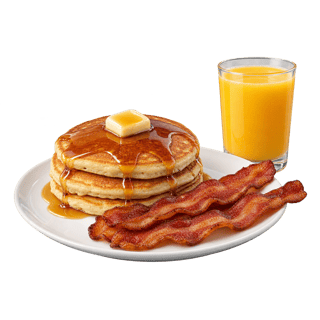
No. In 33,391 adults in Copenhagen, ApoB didn’t change after a normal meal, while triglycerides went up and LDL dipped a little. The 2026 US guideline says the ApoB test is “unaffected by fasting status”. Eat breakfast, and book whatever time suits you.
What we’d do
Don’t fast for ApoB. Put your effort into the things that do move a result between tests: the same lab each time, and no retest sooner than about 4 weeks after a change. If your doctor also wants a fasting triglyceride number from the same draw, they’ll tell you, and that’s about the triglycerides.
Why so many people still fast
Fasting before a cholesterol test was the rule for decades, and plenty of instructions still say it. Even MedlinePlus, the US National Library of Medicine’s encyclopedia, says your provider may tell you not to eat or drink for 4 to 6 hours before an ApoB test. The old reason was the LDL formula, which assumes a fasting sample because it uses triglycerides, and triglycerides do rise after food. ApoB is measured directly, so that reason doesn’t apply.
Same blood, same count, breakfast or not.
In the Copenhagen study, ApoB, ApoA1, non-HDL and the ApoB to ApoA1 ratio “did not change in response to normal food intake”.
What the Copenhagen study found
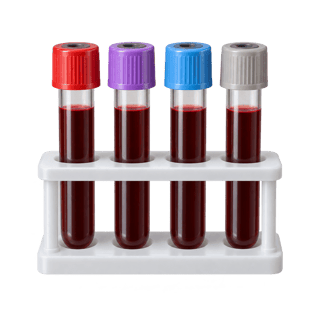
The researchers took blood from 33,391 people aged 20 to 95 at whatever time they’d last eaten, and noted how long ago that was. Compared with fasting, triglycerides were up to about 26 mg/dL higher within 6 hours of eating. LDL was up to about 8 mg/dL lower for 3 to 5 hours. ApoB stayed flat.
They also followed 9,319 people for 14 years. Non-fasting numbers, ApoB among them, still predicted heart attacks, strokes and other heart events, with 1.7 to 2.4 times the risk in the top third against the bottom third.
Why a meal doesn’t move it
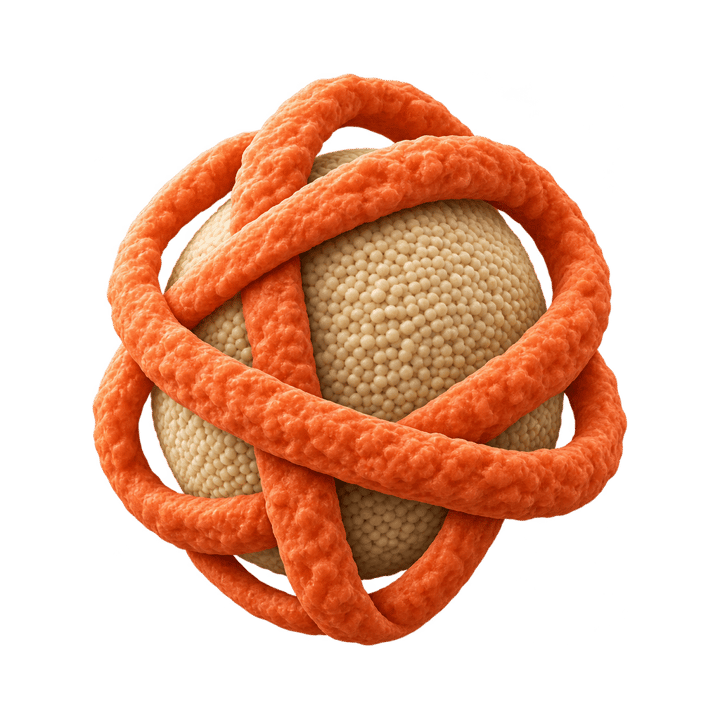
A meal does add some new particles. Your gut packs the fat you just ate into particles called chylomicrons, and each one carries a short form of ApoB called ApoB-48. Lab tests count both forms. But the National Lipid Association says that even after a meal, more than 95% of the ApoB in your blood is ApoB-100, the liver’s form, so the count barely shifts.
It’s like counting cars on a highway at lunchtime. A few delivery vans join the traffic, but they’re under 1 in 20 vehicles, and the total looks the same as it did at dawn.
What does change a result
Between two tests, your ApoB moves about 6% on its own and the lab adds about 5 to 6%. That noise is far bigger than anything a meal does. Did my ApoB really change? shows how big a change has to be before it’s real, and Where can I get an ApoB test? covers what to ask for.
5 sources
- Langsted A, Freiberg JJ and Nordestgaard BG, Fasting and nonfasting lipid levels: influence of normal food intake on lipids, lipoproteins, apolipoproteins, and cardiovascular risk prediction, Circulation, 2008pubmed.ncbi.nlm.nih.gov
- Blumenthal RS, Morris PB, Gaudino M and others, 2026 ACC/AHA guideline on the management of dyslipidemia, JACC, 2026doi.org
- The same guideline, full text, Circulation, 2026api.iscpcardio.org
- Soffer DE, Marston NA, Maki KC and others, Role of apolipoprotein B in the clinical management of cardiovascular risk in adults: an Expert Clinical Consensus from the National Lipid Association, Journal of Clinical Lipidology, 2024pmc.ncbi.nlm.nih.gov
- MedlinePlus, Apolipoprotein B, US National Library of Medicinemedlineplus.gov